Introduction
How to "identify" a molecule?
Is it enough to use the molecular formula ? Obviously not, one molecular formula can correspond to several isomers.
The same molecular formula can produce different isomers through different bonding methods.
With the same bonding method, different isomers can be obtained through different ordering of groups.
With the same order, different isomers can be obtained through single bond rotation.
Summary:
- Different atoms ** make up ** molecules and determine the unique molecular formula
- Same molecular formula, different structure
- Same structure, different configuration
- Same configuration, different conformations
- Scale: composition>structure>configuration>conformation The levels studied in stereochemistry are configuration and conformation
Preparation: key parameters
Bond parameters studied in stereochemistry:
- bond length
- bond angle
Key length
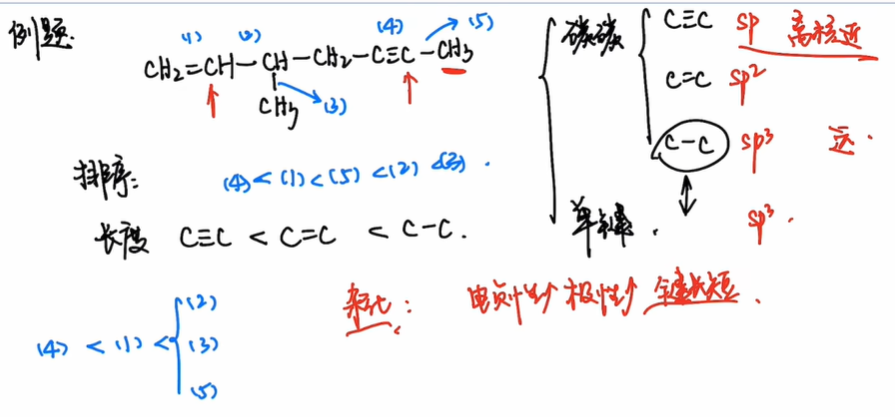
Conclusion
- The greater the electronegativity, the greater the polarity of the bond and the shorter the bond length.
- Corresponding bond lengths for different hybridizations:
- Atomic radius is positively related to bond length
bond angle
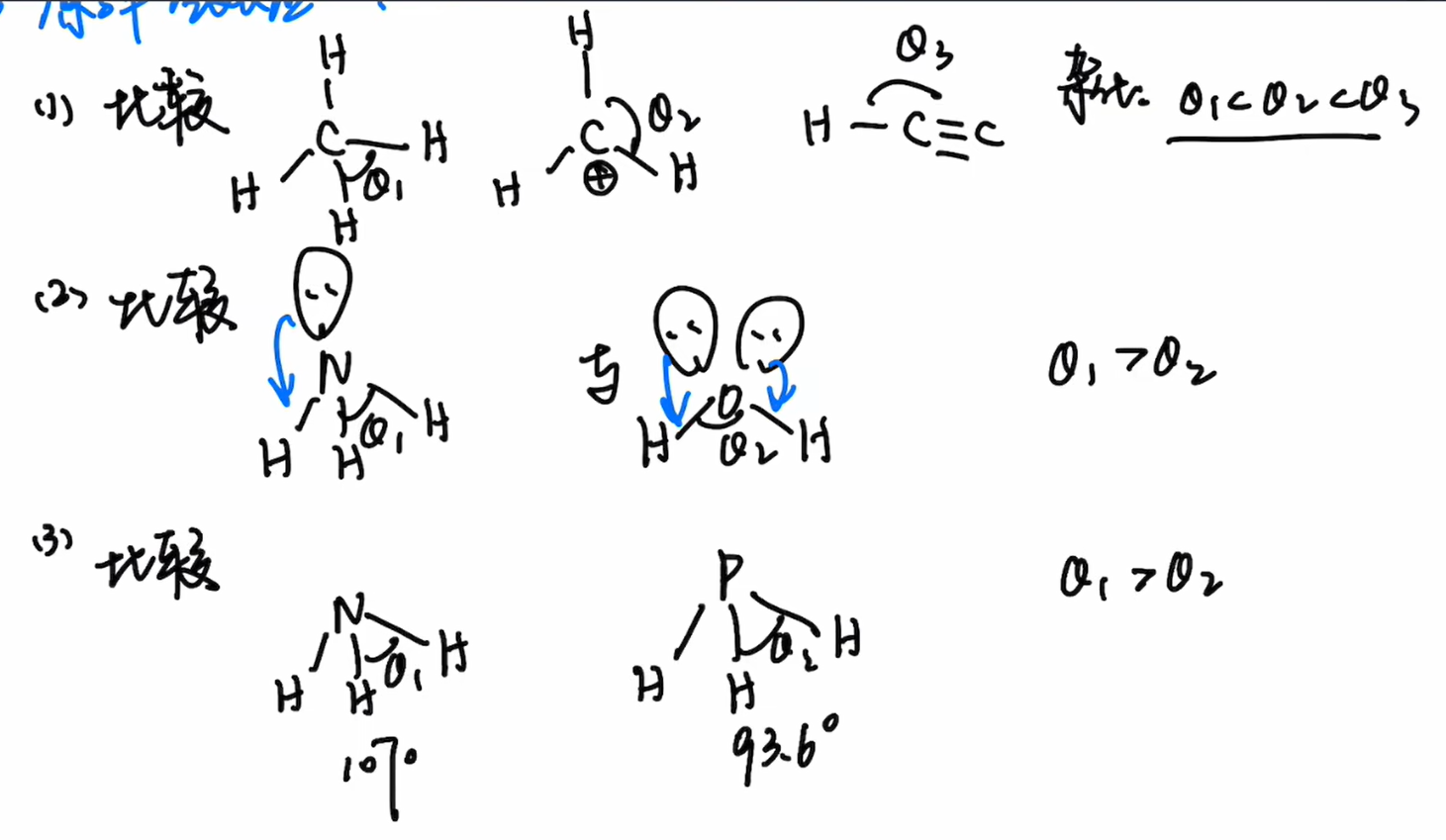
Compare priorities:
- Central atom hybridization
- Lone pair electrons
- Central atom electronegativity
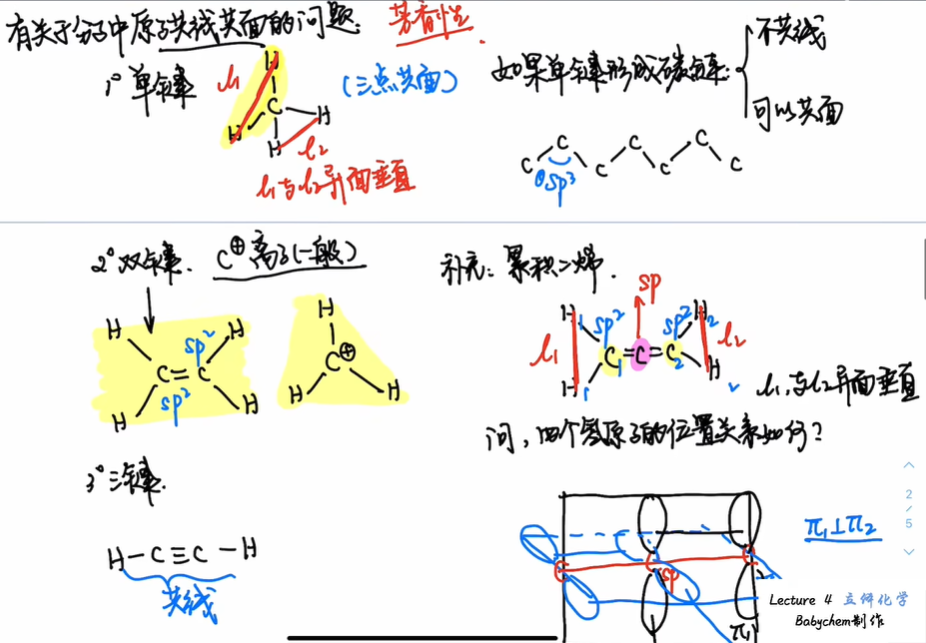
Questions about the collinearity and coplanarity of atoms in molecules